
Strong Body, Healthy Mind
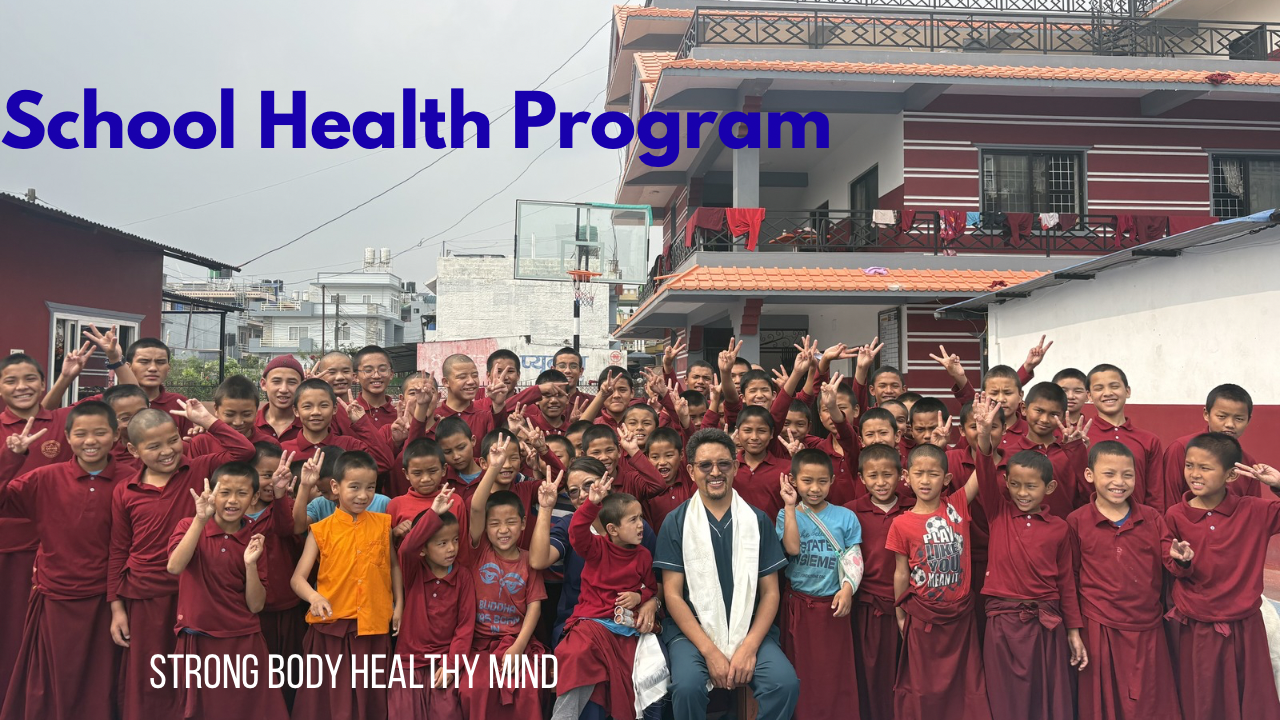
Program Title: "Strong Body,Healthy Mind: A Himalayan Health Adventure"
Overall Vision: To empower children with essential, practical health knowledge that is immediately applicable to their high-altitude environment, respecting their cultural and monastic traditions.
Target Audience: School-aged children (approx. 6-14 years) in monastic and government schools. Duration: 1 Full Day (e.g., 9:00 AM - 3:00 PM) Location: School grounds or monastery courtyard.
Guiding Principles for the Program:
1. Respectful Integration: Acknowledge and respect Buddhist principles. Frame health not just as a physical goal, but as a way to care for the "vessel" that carries the mind towards enlightenment and compassion.
2. Practical & Local: Focus on skills that use locally available resources. Avoid recommending expensive or inaccessible products.
3. Interactive & Fun: Use games, demonstrations, and hands-on activities rather than long lectures. Learning by doing is key.
4. Sustainability: Leave behind simple visual aids (posters) and train a local teacher/monk/nun to continue the lessons.
Proposed Schedule & Activities
9:00 AM - 9:30 AM: Opening Ceremony & Icebreaker
· Welcome: Traditional welcome (e.g., with a white scarf - Khata if appropriate).
· Introduction: Brief explanation of the day's goal: to learn how to keep our bodies and minds strong.
· Icebreaker Game - "Health Wave": Everyone stands in a circle. The leader calls out a health action (e.g., "brush your teeth!", "wash your hands!", "drink water!"). Everyone performs the action together. This is fun and energizing.
9:30 AM - 10:30 AM: Session 1 - The Guardians of Health: Clean Hands & Healthy Teeth (This session uses demonstrable, concrete actions.)
· Activity A: Glitter Germ Attack!
· Concept: How germs spread and why handwashing is crucial.
· Demo: Put a little glitter (representing germs) on one child's hand. Have them shake hands with another child. Watch how the "germs" spread. This visual is incredibly effective.
· Activity B: The Perfect Handwashing Song
· Teach: The WHO-recommended steps for handwashing.
· Action: Use a bucket, clean water, and local soap. Teach them to scrub for 20 seconds (the time it takes to sing the "Happy Birthday" song twice, or a simple, locally known mantra twice). (Om Ara Patsa Nadi)Have everyone practice.
· Activity C: Sparkling Smile Demo
· Teach: The importance of cleaning teeth to avoid pain and difficulty eating.
· Demo: Use a model (or a picture) of teeth and a toothbrush. Show correct brushing technique. If possible, distribute donated toothbrushes and toothpaste for practice (using water only).
10:30 AM - 10:45 AM: Nutritious Break
· Serve a healthy local snack: e.g., an apple, a handful of roasted soybeans, or a roti (flatbread). This is a demo itself for healthy eating.
10:45 AM - 12:00 PM: Session 2 - Fuel for the Body & Mind: Local Nutrition (Focus on making the most of local food sources.)
· Activity A: The Himalayan Food Rainbow
· Concept: Eating a variety of foods for different nutrients.
· Demo: Create a large poster with colored sections. Have children identify local foods and place them in the correct color group (e.g., Orange (Vitamin A): Carrots, Pumpkin | Green: Spinach, Local greens | White (Energy): Rice, Potatoes, Tsampa (barley flour) | Red: Apples, Tomatoes (if available)).
· Activity B: "Eat a Rainbow" Plate
· Action: Give children paper plates and colored pencils. Ask them to draw a healthy meal they could eat using local foods from the rainbow.
12:00 PM - 1:00 PM: LUNCH BREAK
· Provide a healthy, balanced meal that exemplifies the "food rainbow" lesson. Eat together.
1:00 PM - 2:00 PM: Session 3 - Safety First: Mountain First Aid & Hydration (Critical for their remote environment.)
Activity A: The Water Heroes
· Concept: Why drinking clean water is especially important in dry, high-altitude climates to avoid dehydration.
· Demo: Show simple water purification methods: boiling, filtering through a clean cloth, and solar disinfection (SODIS) in a plastic bottle if sunlight is strong.
· Activity B: Tiny Helpers - Basic First Aid
· Teach: Very simple, essential skills.
· Cuts & Scrapes: Demonstrate "Clean, Cover" with clean water and a bandage (clean cloth).
· Stopping Nosebleeds: Lean forward, pinch the soft part of the nose.
· Keeping Warm: Recognize the signs of being too cold (shivering) and the importance of dry layers.
2:00 PM - 2:45 PM: Session 4 - Healthy Mind, Happy Heart: Wellness & Mindfulness (This resonates deeply with monastic traditions.)
· Activity A: Belly Breathing for Calm(Meditation)
· Concept: How breathing can calm nerves, help with focus, and manage big feelings (like anger or fear).
· Action: Teach a simple breathing exercise: place hands on belly, breathe in slowly through the nose (feel the belly expand), breathe out slowly through the mouth (feel the belly fall). Practice together for 2 minutes.
· Activity B: Compassion and Kindness in Action
· Concept: Mental health is tied to how we treat others and ourselves.
· Action: Have each child think of one kind thing they can do for someone else that day. Discuss how helping others makes us feel good inside.
Activity C: Patience in Action
2:45 PM - 3:00 PM: Closing Ceremony & Pledge
· Recap: Quickly review the 4 big lessons: Clean Hands, Good Food, Safe Water, and a Calm Mind.
· Health Warrior Pledge: Lead the children in a simple, fun pledge to practice what they learned (e.g., "I promise to be a Health Warrior! I will wash my hands, eat good food, drink clean water, and be kind!").
· Thank You & Distribution of "Health Warrior" Certificates: A simple certificate or a small token (like a pencil with a health message) makes the day memorable
Logistics & Materials Needed
· Local Liaison: A teacher or senior monk/nun must be involved from the planning stage to ensure cultural appropriateness.
· Translators: Health workers or volunteers fluent in the local language (e.g., Nepali, Tibetan, Lowa ) and dialect.
· Simple Materials:
· Soap, buckets, towels, glitter.
· Toothbrushes, toothpaste (if possible for demo).
· Posters, markers, colored pencils, paper plates.
· Examples of local foods.
· First aid supplies for demo (clean cloth, bandages).
· Certificates or small gifts for participants.
· Food & Water: Arrangements for providing a healthy lunch and snacks.
Post-Program Sustainability
1. Leave Behind: Laminated posters of the "Handwashing Steps," "Himalayan Food Rainbow," and "First Aid Tips" for the school.
2. Train the Trainer: Spend 30 minutes after the program with the teachers/monks, going over the key activities so they can repeat them.
3. Follow-Up: If possible, plan a brief follow-up visit or message in 3 months to check progress and answer questions.
This program is designed to be a joyful, engaging, and truly useful day that gives these children practical tools to improve their immediate and long-term health and wellbeing.